
In Conversation with Anik Khan

I spoke last week with Anik Khan, Queens-based rapper, singer and song-writer, about his recently released LP ONĒK. We discussed what music means to him, how his songwriting has changed, and about the meaning behind this new project.
Starting off asking about your earlier life, how long would you say you've felt connected to music, do you think there's a certain period of life where you especially came to love it?
Yeah, absolutely. When I was nine years old, we were at this Bangladeshi grocery store, this Bengali deli in Queens, where I grew up. My sisters would go all the time - at the time, you could rent Bollywood DVDs, cassette tapes and things like that. And in all of the cassette tapes and DVDs, there was one album that looked like it wasn't supposed to be there.
And it was DMX, It's dark and hell is hot. And I had no idea how that set landed in that mix of all of this Bollywood stuff.
It was there and I was like, "Hey I want this". I'm pretty sure it was bootleg because they didn't know the value of that album, and they gave it to me for like 50 cents. You could tell that somebody already was listening to it because when I hit play, it didn't start with the intro - I hit play and all I heard was bom ba bombom, bom ba bombom -
It immediately took over my life. I was like, what is this? What is this sound? I started walking more confident, like all this insane energy that just - at this point, I was nine, so I've only lived in the country for four years. So, you know, it's like this energy spread through my legs into my chest and everywhere. And I'm just like, what is this feeling? I didn't understand. I was like, how can music move you this way? Prior to that, it was all classical Bali music. That's all I heard in my house. Then I hear ‘Ruff Ryder’s Anthem’ and I'm like, whoa, wow.
During the recording of ONĒK, you travelled quite a lot. You worked with a whole range of different people from different backgrounds, and the variety of styles and players on the record makes it feel really fresh and textured.
So I'm curious, did you, pick up any new instruments during the creation of the album? Have any of these become mainstays, which, you know, we can hope to see on future projects?
Yeah, man. That's such an awesome question. I have not picked up an instrument and I want to so bad - I will tell you a secret. One goal in my life is to like play the piano well enough to go to different rooftops across the world, and just have like a little cigar on in my mouth, and just play the piano and have a friend of mine sing, while a chef is cooking in the background. That's how you're recording the song - you know what I'm saying?
I didn't get to learn an instrument, but I did get to learn songwriting. This entire album was structured with very pop songwriting: and there's a science to that. Like, hey, when does the hook come in? Is it under eight seconds? When are we doing this drop? The album is a lot of like, bullets, no extra fat, no sanding down, which I think a lot of really good pop music is. I had to learn how to write in those structures because I hadn't before. Sometimes I would just do a verse that's 32 bars, or make a chorus that's really long and it would sound something more for you to engage in a more chill way.
And I think, in those three years that I travelled, I kept learning how to develop my songwriting skills. And that kind of was what I considered the instrument because it was a completely new learning for me.
That ties into a question I was going to ask later, so I guess I'll stick this in now: I really love how you articulate your thoughts on ‘Up and Down’. That's one of my personal favourites from the record, especially in that second verse. You talk about a lot, but you've spun the wordplay in such neat, concise ways, and you keep it really honest through that.
Learning to write in a different way, was that taken from others in very direct "I'm gonna sit down and learn this" way, or did you take advice from different people and try to meld all that into your own way of writing?
So I've always challenged myself in songwriting. I think I've had the natural gift of gab. But I think to be able to organize that all in a thought - where you want not just you and your community to understand it - how do you extend it to other branches?
You know, like you love the second verse of ‘Up and Down’. That whole thing is about South Asian socioeconomy and you know, depression and religion and all this other sh*t. But you related to that. And I think, I learned through watching different people and also having great friends that are incredible songwriters. I focus on exactly what I want to say because my story is my own. But I write it in a way, that if my six-year-old niece were to hear it, she could still understand it in some way. And that was really important for me. I think that takes a lot of trial and error to figure out what that could look like.
Yeah, that's awesome. I feel that. Now, it's been a while since you dropped your last project, that kind of double album, Approved and Denied. So I want to ask, how does it feel doing this big press release tour after the long break? Is it strange to be back in the spotlight, especially with something as personal as ONĒK?
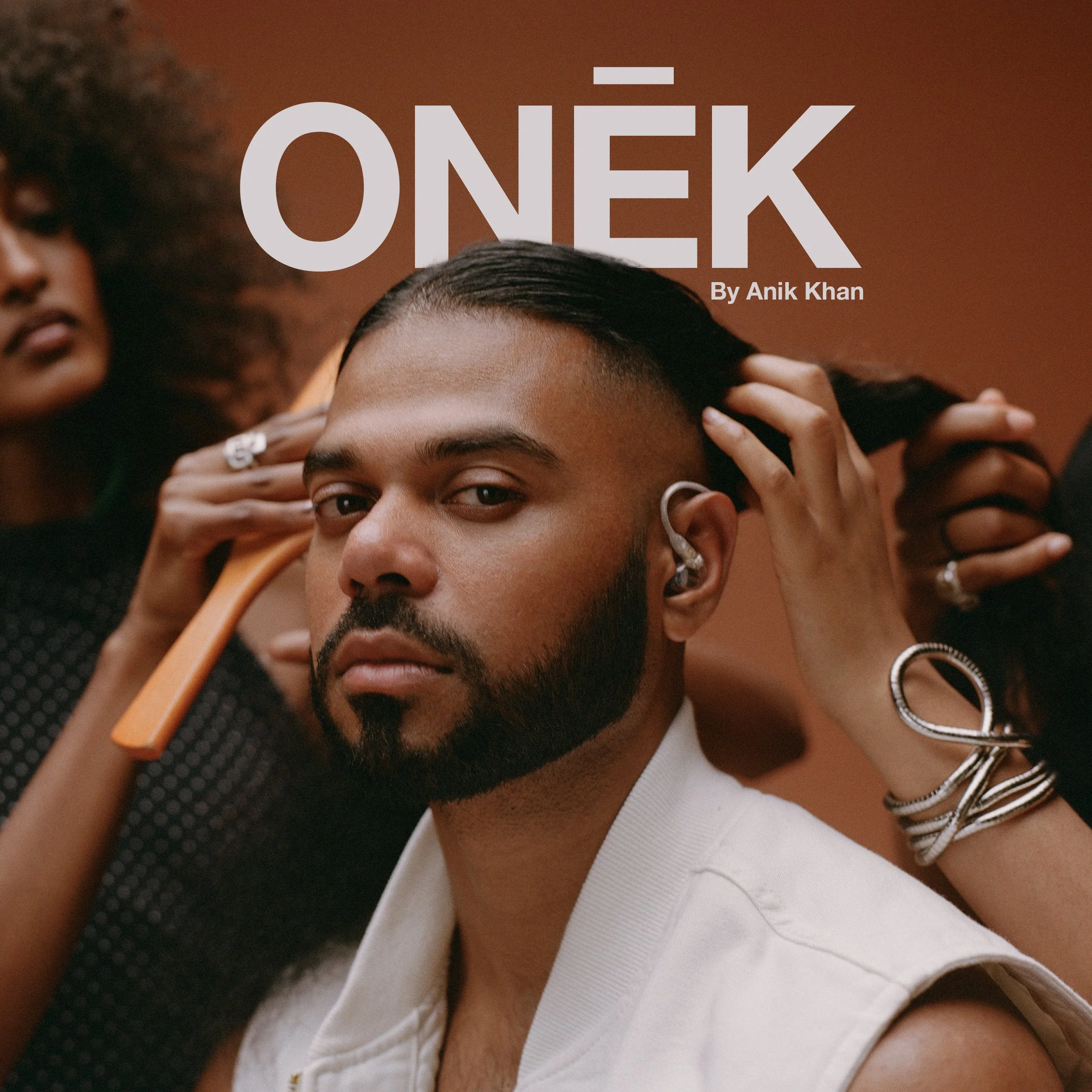
Yeah, man, it's a different time, a different era. Music works differently. Things are moving differently. I've been making this record for three years, so it feels really good to have people hear it and live with it. That's why I do it, to have people be able to live with something and feel good about something.
But you can definitely tell that things are different, and every artist has got to find their footing and find what different looks like for them, you know. Those four years, I took to create, and I'm back on my like, "hey, man, listen to me", which is - like, I'm not the artist that goes up to people, shake my hand and say, "I'm an artist". I have to practice that. I have to literally be like, "hey, what are you doing?... I sing, I rap". I would probably never even mention that in a conversation.
I had to get back to - “oh, you're back to releasing, you gotta let people know you got an album out, you're a singer you're a rapper.” A lot of artists that I know go through their own version of that.
Relating to that question, and in the vein of imposter syndrome, Let's talk about the huge success of Spoiled Brown Men, which has garnered two million views on YouTube. Props to you, my gosh.
But yeah, seeing all the love being put out for something, which you say, has been years in the making. Has that been affirming for your confidence, whether it be for yourself personally, or yourself as an artist?
For sure, man. I mean, it's definitely affirming to see that people are listening. But I did make sure I practiced for myself, regardless of if it gets two million or 200 million or 200 views, I know from the bottom of my heart that I did everything I could and made the best thing that I could and I believe in it. I love that people are gravitating to it, that's making me very, very happy. And I hope more do. And I hope more of it gets shared. But by the end of the day, I could go to bed knowing if that never happens, I did everything that I wanted to do. And I believe in it, you know?
I think the reason I mentioned that is because, before in my artistry, I wanted the affirmations and the reassurance. I didn't believe in what I was putting out, there was not enough weight on how much I believe in it versus, you know, outside sources for me to convince myself that it was good. I wanted to make sure I worked on my mind and my spirit too; although I love support and making sure people around the world listen to it, in my heart, heart of hearts, I know what I did and I don't question that.
I think that has been the difference between my last project and this one.
So, like you say, that was a conscious effort on your part and you felt the kind of mental rewards of that, that's lovely.
The outro song, ‘Infinite NETIC’, is really striking and beautiful, especially so with being able to see you perform it live on your COLORS show. It takes on quite a sombre tone, and I thought this actually made the spoken word at the end of the track from your friend, Netic, that much more poignant. Because he speaks in such an uplifting way, even as he's talking about things like mortality and purpose and all of this stuff.
I want to ask, do you have any advice to myself, to the fans, to anybody listening - on how to stay grounded, and how to believe in what each of us has to offer to the world?
Wow, man. Yeah. Well, thank you so much for even wanting to know what I think about that. Cause that's a heavy thing to think about. I don't think heavy is bad. You know… I think, there's some people you don't want that kind of advice from, So I appreciate you even wanting to want that from me. I will share a story about Netic and then tell you, and then get to that ground. I don't know if you know, that voice note that I have of Netic was sent to a friend of ours, five to eight hours before he was murdered. So he spoke about his death, and he said, you know, he said, like, the bullet can hit right now, I'm still infinite. And a few hours later, he was gone. He transitioned - I don't like saying he's gone. And he transitioned into his next life. And this album is dedicated to him. He's the reason I know my manager, Matthew Morgan, and his wife, Jocelyn Cooper, is the reason I'm doing this press interview.
And he's been such a connector of dots to everything in my life.

And that's why I needed to end it with him because I've dedicated the record to him. His brother sent me that voice note and was like, do what you want with it. I just sat with it for two or three years. I didn't touch it. And while I was literally about to leave the sessions that I did in Dubai, the last night, we started playing a loop and that's when I played the voice note. And I was like, I think it's time. And that's when I talked about it.
And I think that is a very direct connection to your question of grounding, which is, You can have the most traumatic things happen to you. You can lose great friends. You can have health issues. You can face financial struggles. You can go through everything this life has to offer, but you cannot forget that it's literally the beauty of it all.
What is life without those experiences? It actually is nothing. It's stagnant. Peace comes from you finding it through chaos. Peace doesn't come from just finding it.
I think the best way to stay grounded in all that is continuously reminding yourself, that, whether you lose one of your closest friends like I did, or whether you put out a new record and you're super vulnerable about it, or whether you're in school and you're trying to do your best while trying to chase your ambitions - the best thing you can do is say, well, this is what it's supposed to feel like.
This is the whole reason we live. We cry, we laugh, we jump, we fall, we lose, we gain. Like, that is what that is. And if we can continuously keep reminding ourselves about that, I think that's how I personally continue to stay grounded, and continue to appreciate everything that comes my way, whether it's the lows or the highs.
You can listen to ONĒK on all streaming services, or access his linktree here: