
The World of LUX: An analysis of the spiritual and sonical architecture of Rosalía’s LUX
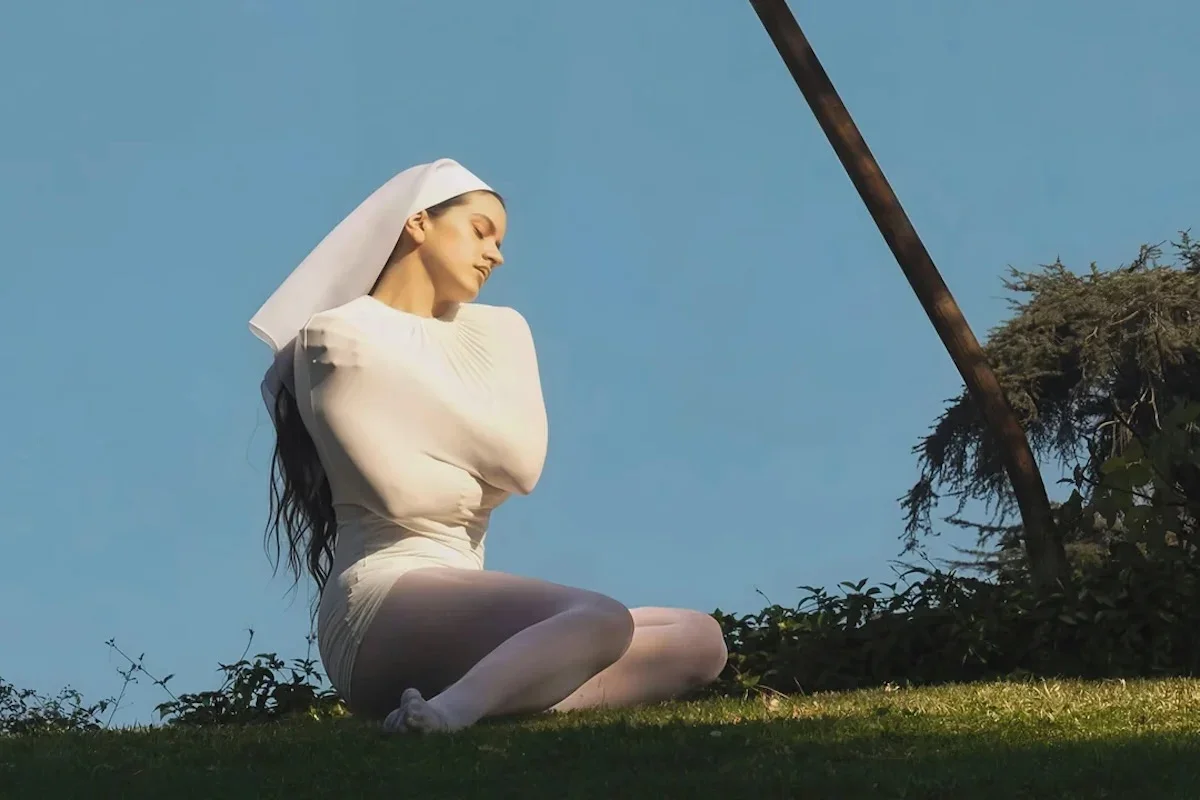
As the year winds down, we’re surrounded by religion, reinvention, intimacy, and for final year university students, the emerging pressure of theses and dissertations. Many of us only hope for a solid grade, but how about a Grammy? Rosalía did just that with her 2018 graduate thesis and album ‘El Mal Querer’, which went on to win the best Latin, Rock or Alternative Album at the 2020 Grammys. She followed it with the forward-thinking, reggaeton-driven Motomami in 2022, and now she’s entering her most ambitious era yet with LUX.
I wasn’t exactly craving a new Rosalía project after Motomami failed to align with my taste due to its occasionally abrasive production. Still, the early teasers for what I assumed would be an avant garde dance track named after the German nightclub pulled me back in. The lead single ‘Berghain’ blew me away with its lush operatic vocals and sweeping orchestral production. Unfortunately, Björk’s contributions do not add to the song and Yves Tumor’s outro undercuts the song’s Roman Catholic atmosphere rather than elevating it.
‘Berghain’ proved to be a perfect introduction to LUX. Rosalía’s impactful vocal range and skill shape the album from the instrumentally dynamic opener ‘Sexo, Violencia y Llantas’ to the emotionally raw closer ‘Magnolias’ which serves as a reflective expression of gratitude for her life as she contemplates mortality.
Though not as boldly atmospheric as ‘Berghain’, the remainder of LUX largely stays true to its promise of a diverse yet cohesive blend of orchestral, opera and avant-pop. My personal highlight ‘Sauvignon Blanc’ delivers a more intimate orchestral moment, while tracks such as ‘La Ramba Del Perdon’ and ‘Divinize’ bring a flamenco-infused edge that broadens the album’s palette.
A defining aspect in this album is its purposefully broad array of languages. Despite Rosalía only speaking three, the album contains lyrics from twelve languages, promoting a sense of intercultural unity in this album. Carminho brings a gentle Portuguese charm to the penultimate track ‘Memoria’. Porcelana has an entire verse in Japanese. Unfortunately, the contributions by the uncredited supporting artist hold the song back, taking you out of the tense atmosphere Rosalía created on this track, marking a weak point of this album.
‘Lux’ is the Latin word for ‘light’. Combined with LUX listening party phrases ‘sometimes being in complete darkness is the best way to find the light’, Rosalía’s Christian background, and the album cover showing her in a white outfit resembling a nun’s habit and veil, it becomes evident Rosalia’s embrace of her faith is a central theme throughout the album. It’s also possible this is a return to faith for Rosalía as tracks such as the folk rooted ‘Mundo Nuevo’ symbolise rebirth.
LUX symbolises a spiritual transformation, combining intimacy with operatic bombast delivering a career defining contribution to her already strong catalogue. This is the type of art that captures and immerses you into a world of its own. Rosalía takes us from darkness to spiritual rebirth through a carefully constructed ascent toward spiritual clarity, which doesn’t just illuminate Rosalía’s next chapter, it changes the light we see her through, revealing an artist who knows exactly where she’s going.
4.5 Stars
Favourite Tracks: Sauvignon Blanc, Magnolias
Least Favourite Tracks: Porcelana